

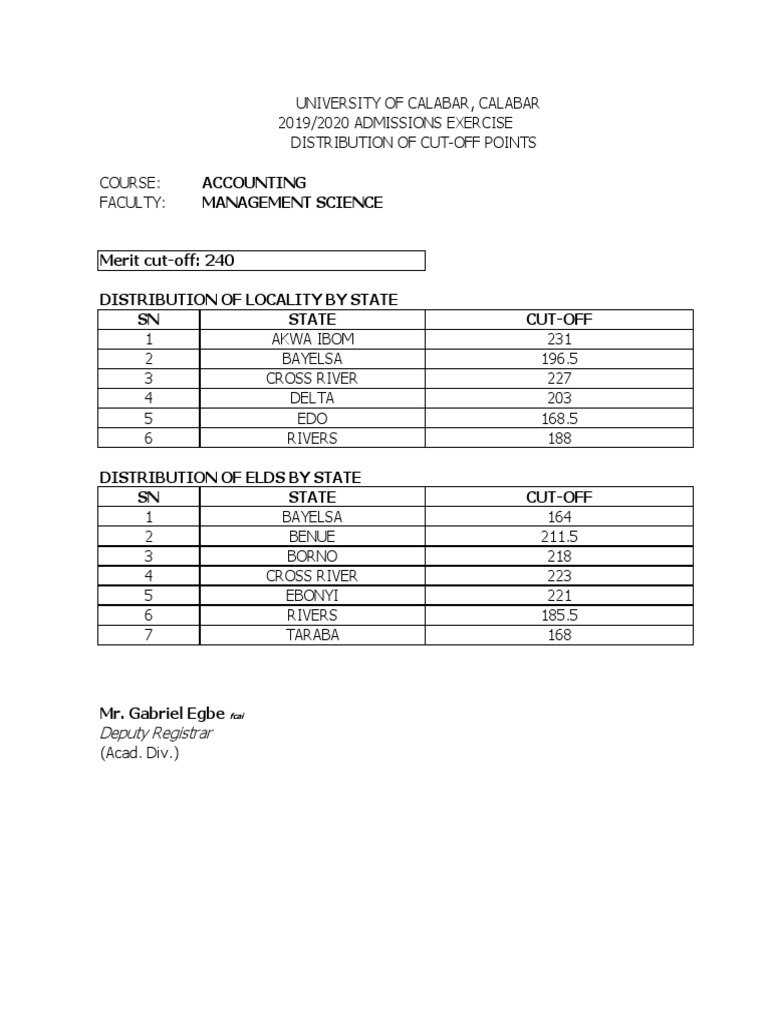
The University of Calabar cut off mark is a pivotal factor for aspiring students. Competing for a spot at this prestigious institution requires understanding and meeting the set criteria. 2021’s cut off mark has sparked curiosity and anxiety among applicants. Understanding the significance of this benchmark is crucial to securing admission. Delve into the specifics of the University of Calabar cut off mark to enhance your chances of success. Your academic journey begins with this vital piece of information.

Understanding University of Calabar Cut Off Mark
Welcome to our comprehensive guide on the University of Calabar cut off mark. If you are a student aspiring to join this prestigious institution, understanding the cut off mark is crucial. In this article, we will delve into what the University of Calabar cut off mark is, how it is determined, the importance of meeting the cut off mark, and tips on how to prepare effectively to meet the required score.
What is a Cut Off Mark?
A cut off mark is the minimum score or percentage that an individual must achieve in an examination or test to be considered for admission to a particular institution or course. In the context of the University of Calabar, the cut off mark is the benchmark score set by the institution that prospective students must meet to be eligible for admission.
How is the University of Calabar Cut Off Mark Determined?
The University of Calabar cut off mark is determined based on a variety of factors, including the number of available spaces in each program, the overall performance of applicants in the entrance examination, and the competitiveness of the program. The University’s admission committee carefully considers these factors to set a fair and competitive cut off mark each year.
The Importance of Meeting the Cut Off Mark
Meeting the University of Calabar cut off mark is crucial for prospective students as it is the first step towards securing admission to the institution. Failing to meet the cut off mark means that your application may not be considered, regardless of your qualifications or potential. Therefore, it is essential to strive to meet or exceed the cut off mark to increase your chances of admission.
Tips to Prepare Effectively for the University of Calabar Cut Off Mark
Preparing for the University of Calabar cut off mark requires dedication, focus, and strategic study habits. Here are some tips to help you prepare effectively:
1. Understand the Exam Format:
Start by familiarizing yourself with the format of the entrance examination. Understand the types of questions that are typically asked and the time allocation for each section.
2. Create a Study Schedule:
Develop a study schedule that allocates time for each subject or topic that will be covered in the examination. Be consistent and disciplined in following your schedule.
3. Practice Past Questions:
Practice makes perfect. Obtain and practice past questions from previous entrance exams to get a feel for the types of questions that may be asked and to identify areas where you need to improve.
4. Seek Help When Needed:
Do not hesitate to seek help from teachers, tutors, or peers if you encounter difficulties in certain subjects. Asking for help can clarify concepts and improve your understanding.
5. Take Care of Yourself:
Remember to take care of yourself during the preparation period. Get enough rest, eat well, and engage in physical activities to maintain a healthy body and mind.
In Conclusion
Understanding the University of Calabar cut off mark is essential for any student aspiring to join the institution. By following the tips provided in this article and diligently preparing for the entrance examination, you can increase your chances of meeting the cut off mark and securing admission to the University of Calabar. Remember, with dedication and hard work, you can achieve your academic goals and fulfill your dreams of studying at this esteemed institution.
UNICAL Cut Off Mark for 2024 & 2025 Admission Exercise
Frequently Asked Questions
What is the University of Calabar cut off mark for admission?
The University of Calabar’s cut off mark for admission varies by department and program. Typically, the general minimum cut off mark for undergraduate programs is 180 for UTME candidates and higher for direct entry candidates. However, specific departments may have higher cut off marks based on the competitiveness of the program.
How is the University of Calabar cut off mark determined?
The University of Calabar determines its cut off marks based on factors such as the number of applicants, the capacity of each department, the performance of applicants in the UTME or direct entry exams, and the general competitiveness of the program. The cut off marks are set to ensure that qualified candidates are admitted into various programs.
Can the University of Calabar cut off mark change from year to year?
Yes, the University of Calabar cut off mark can change from year to year depending on various factors such as the number of applicants, the performance of candidates in the entrance exams, changes in admission policies, and the competitiveness of specific programs. It is advisable for prospective students to regularly check the university’s official portal for updates on cut off marks.
Final Thoughts
In conclusion, the University of Calabar cut off mark plays a critical role in determining admission eligibility for prospective students. Meeting this benchmark is essential for gaining acceptance into various programs at the university. Aspiring students should strive to achieve the required cut off mark to increase their chances of securing a spot at the University of Calabar. Admission decisions heavily rely on how well applicants perform in relation to the set cut off mark. Stay informed and prepared to meet the University of Calabar cut off mark for a successful admission process.